

AI Summary Medical Reports to Carry: Lists the important medical records required for your first fertility appointment, including hormonal blood tests, pelvic ultrasound reports, semen analysis, HSG, and previous fertility treatment records. Blood Tests and Ultrasound Scans: Explains the importance of AMH, FSH, LH, thyroid tests, prolactin levels, and pelvic ultrasound scans in evaluating reproductive health. Medical and Reproductive History: Describes the personal health details you should share with your fertility specialist, including menstrual cycles, previous pregnancies, medical conditions, medications, family history, and lifestyle habits. Previous IVF and IUI Records: Explains how previous fertility treatment details, medication protocols, egg retrieval results, embryo quality, and transfer outcomes help specialists plan future treatment. Fertility Consultation and Treatment Guidance: Highlights how organized medical reports help intended parents prepare for fertility consultations, explore IVF treatment options, understand international treatment pathways, and receive appropriate specialist guidance. Introduction Preparing for your first fertility appointment can feel overwhelming, especially if you have been trying to conceive for some time or are considering assisted reproductive treatments. Knowing which medical reports to bring can help your specialist understand your reproductive health, identify possible concerns, and recommend appropriate next steps. Organizing your medical records in advance may also prevent unnecessary repeat investigations and make your consultation more productive. Whether you are exploring fertility options for the first time or seeking another medical opinion, carrying your previous reports can help you approach your consultation with confidence. What Medical Reports Should You Bring to Your First Fertility Consultation? Your specialist may review several medical documents to understand your reproductive health and previous investigations. If you have already undergone a fertility test, bring the original report or a digital copy. Here are the most important records to organize: Hormonal blood test reports: AMH (Anti-Müllerian Hormone), FSH, LH, estradiol, prolactin, thyroid function tests, and other hormone investigations. Pelvic ultrasound reports: Transvaginal or abdominal scans showing ovarian condition, follicle count, uterine health, cysts, fibroids, or endometrial thickness. Semen analysis reports: Sperm concentration, motility, morphology, and any additional male fertility investigations. Fallopian tube and uterine investigations: HSG, saline sonography, hysteroscopy, or other procedures assessing the uterus and fallopian tubes. Previous surgical records: Operative notes, discharge summaries, and details of previous abdominal, pelvic, or reproductive surgeries. Previous fertility treatment records: Medication protocols, IUI cycles, IVF stimulation details, egg retrieval records, embryo transfer reports, and treatment outcomes. You do not need to complete every test before your first appointment. Bring the reports you already have, and your specialist can determine whether additional investigations are required. Which Blood Tests and Ultrasound Scans Are Important? Hormonal blood tests and imaging studies help doctors assess different aspects of reproductive health. Ovarian reserve tests, including AMH and FSH, may provide information about the remaining egg supply and expected response to fertility medications. Thyroid and prolactin levels can identify hormonal conditions that may affect menstrual cycles or conception. Pelvic ultrasound scans help evaluate the uterus, ovaries, follicles, and endometrial lining. Depending on your symptoms and medical history, your doctor may recommend additional investigations. If you are researching the best ivf clinic, ask how previous reports are evaluated and whether the treatment plan is customized according to your medical findings. What Medical History Should You Share With Your Fertility Specialist? Medical reports are important, but your personal and reproductive history can provide equally valuable information. Prepare a written summary of your health, previous pregnancies, menstrual cycles, and medications to help your specialist understand your circumstances. Include the following details : Menstrual history: Cycle length, regularity, painful periods, unusual bleeding, and ovulation tracking. Pregnancy history: Previous pregnancies, miscarriages, ectopic pregnancies, childbirth, or pregnancy complications. Medical conditions: PCOS, endometriosis, thyroid disorders, diabetes, autoimmune conditions, or other relevant diagnoses. Medications and supplements: Prescription medicines, vitamins, herbal supplements, and previous fertility medications. Family medical history: Genetic conditions, early menopause, reproductive health concerns, or inherited disorders. Lifestyle information: Smoking, alcohol consumption, exercise, sleep patterns, and relevant occupational exposure. Both partners should share their medical history openly. Fertility challenges can involve female factors, male factors, or a combination of both. Complete information helps your specialist recommend appropriate investigations and discuss suitable treatment options. How Do Previous IVF or IUI Treatment Records Help? Previous treatment records can help your doctor understand how your body responded to fertility medications, whether fertilization occurred, how embryos developed, and what happened during earlier treatment cycles. For couples who have undergone IUI, understanding the iui full form (Intrauterine Insemination) and carrying previous cycle records can help the specialist evaluate whether another cycle or a different approach may be appropriate. Similarly, an IVF consultation for intended parents can involve reviewing stimulation protocols, egg retrieval results, embryo quality, transfer outcomes, and previous complications to support future treatment planning. Get Expert Guidance for Your Fertility Journey Preparing your medical reports is an important step toward making informed decisions about your reproductive health. Whether you are exploring fertility treatments, seeking a second opinion, or planning treatment in the USA, having the right guidance can make the process easier and more organized. Familycreation4all supports intended parents with personalized fertility guidance, documentation assistance, treatment coordination, and connections to trusted fertility specialists. If you need help understanding your reports or exploring suitable treatment options, contact our team at +919510243012 to discuss your requirements and take the next step toward building your family. Frequently Asked Questions Q. Do I need to repeat all my fertility tests? A. Not necessarily. Your doctor will review existing reports and decide whether they are recent, reliable, and sufficient for planning. Some investigations may need to be repeated if results are outdated or your medical circumstances have changed. Q. What is IVF treatment, and when is it recommended? A. IVF (In Vitro Fertilization) is a treatment in which eggs are fertilized with sperm in a laboratory, and the resulting embryo is transferred into the uterus. It is recommended based on individual fertility conditions and medical evaluation. Q. Should both partners attend the first consultation? A. Yes, whenever possible. Both partners can discuss their medical history, understand recommended investigations,
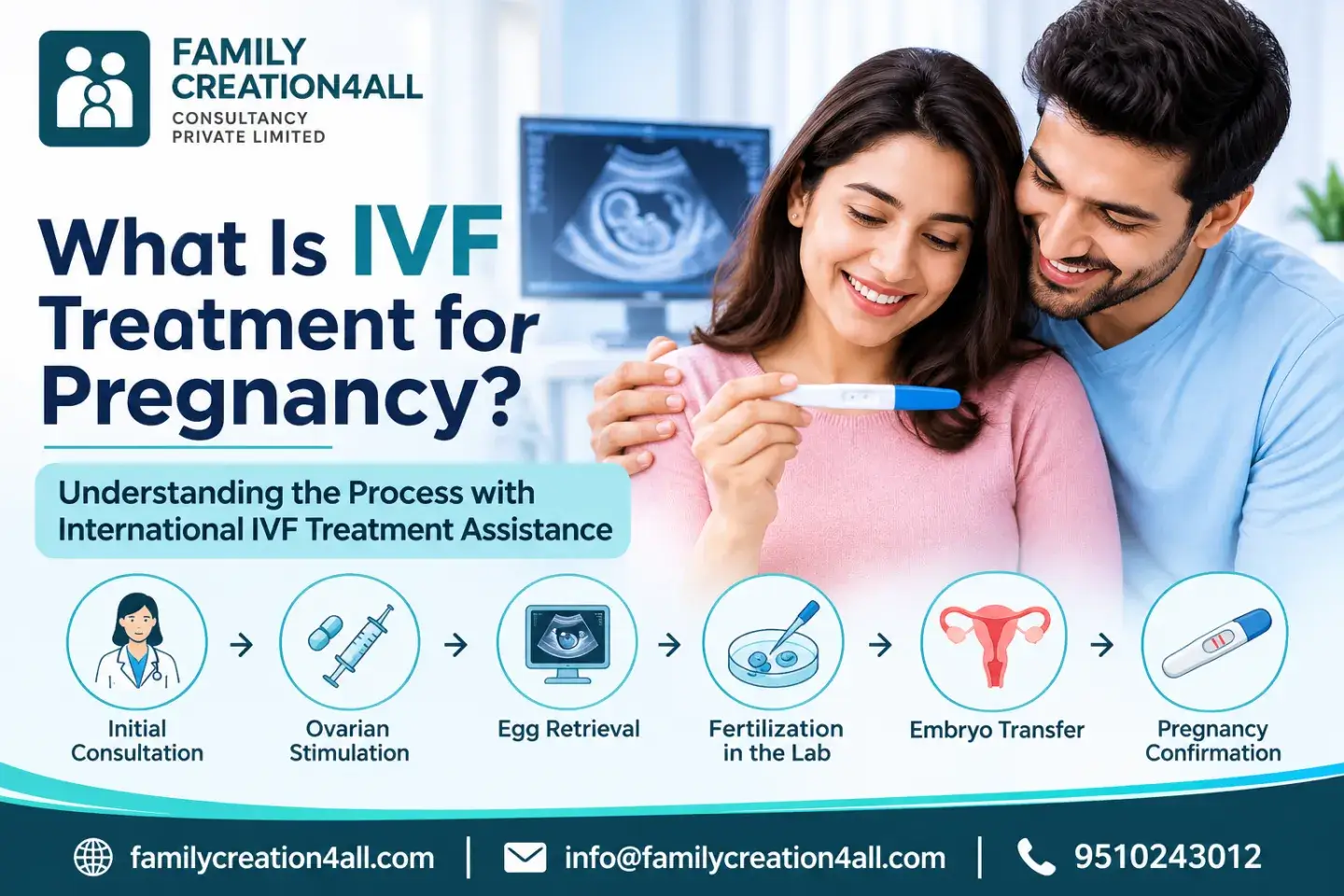
What Is IVF Treatment for Pregnancy? Understanding the Process with International IVF Treatment Assistance
Key Things to Know About IVF IVF is a fertility treatment that helps people who experience difficulties getting pregnant naturally. The process involves collecting eggs, fertilising them with sperm in a laboratory and transferring an embryo into the uterus. IVF may be recommended for different fertility-related conditions. International IVF treatment assistance helps intended parents coordinate fertility treatment in another country. Professional guidance can make clinic selection, medical records, appointments and travel arrangements easier to manage. Introduction Starting a family is a dream for many people. Some face challenges when trying to have a family naturally. One of the medical options available to them is to take help from In-vitro Fertilization (IVF) to build their family. Now, individuals have the freedom to opt for fertility treatment outside their country as well. While there may be better and specialized facilities available in other countries, understanding the treatment process, deciding on the right clinic, and making the necessary travel and legal arrangements may be a daunting task. This is where international IVF treatment assistance becomes helpful. It provides guidance and coordination so intended parents can understand their options and prepare for their fertility journey with greater confidence. What Is IVF Treatment for Pregnancy? IVF stands for In Vitro Fertilisation. It is a medical fertility treatment in which an egg and sperm are combined in a laboratory to create an embryo. A suitable embryo may then be transferred into the uterus to achieve pregnancy. In natural conception, fertilization occurs inside the woman’s body. For IVF, this occurs in a controlled environment outside the body, like a lab. Some of the conditions for which your doctor may suggest IVF include: Blocked or damaged fallopian tubes. Low sperm count or sperm movement problems. Ovulation-related difficulties. Endometriosis. Unexplained infertility. Certain age-related fertility challenges. IVF is not suitable for everyone. A fertility specialist evaluates medical history and test results before recommending treatment. How Does the IVF Treatment Process Work? IVF involves several stages. Each stage is carefully monitored by fertility specialists to support the best possible outcome. 1. Initial Fertility Consultation The process begins with an IVF treatment consultation. The doctor reviews medical history, previous treatments and fertility concerns. Blood tests, ultrasound scans and semen analysis may be required. 2. Ovarian Stimulation The woman receives prescribed hormonal medication to help her ovaries produce multiple mature eggs. Doctors monitor egg development through scans and blood tests. 3. Egg Retrieval When the eggs are ready, a specialist collects them using a minor medical procedure. The procedure is usually performed with sedation. 4. Fertilisation in the Laboratory The collected eggs are combined with sperm in a laboratory. In some cases, doctors use a technique called Intracytoplasmic Sperm Injection (ICSI), where a single sperm is injected directly into an egg. 5. Embryo Development Fertilized eggs are monitored as they develop into embryos. The embryology team checks the development and selects the best embryos for transfer. 6. Embryo Transfer A selected embryo is placed inside the uterus using a thin medical tube. The procedure is generally quick and does not usually require surgery. 7. Pregnancy Test The fertility clinic will recommend taking a blood test to measure the pregnancy hormone hCG after a given period to help confirm if a pregnancy has occurred. What Is International IVF Treatment Assistance? International IVF treatment assistance means receiving guidance and coordination when exploring fertility treatment in another country. Some intended parents consider treatment abroad because they want to explore different clinics, specialist experience, treatment options or costs. However, arranging treatment internationally requires careful planning. Familycreation4all supports intended parents by helping them understand available fertility options and coordinate different parts of their journey. This assistance may include: Guidance on selecting suitable fertility destinations. Connections with fertility clinics and specialists. Medical record and document coordination. Appointment scheduling and communication support. Travel and visa guidance. Information about donor and embryo-related arrangements. Support with understanding treatment requirements. The actual medical treatment is provided by qualified fertility professionals at the selected clinic. How Can International Fertility Treatment Coordination Help? Planning fertility treatment in another country can involve several people, documents and appointments. International fertility treatment coordination helps bring these activities together. It can make the process easier by helping intended parents understand treatment options, compare clinic services, organise medical reports and plan appointments. For example, intended parents may need to send previous fertility reports to an overseas clinic before travelling. Coordination support can assist in sorting these documents and liaising between the intended parents and the medical team. It can explain appointment schedules, travel itinerary, and necessary documents. Because of good coordination, there is less time wasted and less confusion. However, it is important to remember that medical decisions always remain with the treating fertility specialist. Why Do Intended Parents Need IVF Clinic Referral Services? Finding a suitable fertility clinic is an important step when considering IVF abroad. IVF clinic referral services help intended parents explore available medical providers based on their needs. Before selecting a clinic, consider: The qualifications and experience of fertility specialists. Laboratory facilities and available treatments. Clinic registration and accreditation. Clear treatment costs and payment policies. Success rates explained according to age and medical condition. Patient support and communication services. Referral assistance can help identify options, but intended parents should independently verify clinic credentials and discuss treatment suitability with the medical team. What Should You Consider Before Starting International IVF Treatment? Before travelling for IVF, take time to understand the complete process. Consider the following points: Discuss your fertility concerns with a qualified specialist. Collect all previous medical reports and test results. Understand the estimated treatment cost and possible additional expenses. Check the legal requirements of the destination country. Confirm the clinic’s policies regarding donors, embryos and treatment procedures. Understand how follow-up care will be managed after returning home. Laws relating to fertility treatment, donor arrangements and surrogacy differ between countries. Always seek appropriate medical and legal advice before making decisions. How Can Familycreation4all Support Your Fertility Journey? Familycreation4all helps intended parents navigate fertility-related decisions through

How Does IVF Treatment Work Step by Step for Intended Parents?
AI Summary: IVF (In Vitro Fertilisation) is a fertility treatment that combines eggs and sperm in a laboratory to create embryos. The process includes fertility assessment, ovarian stimulation, egg retrieval, fertilisation, embryo development and embryo transfer. A fertility appointment helps intended parents understand their medical condition and available treatment options. IVF may involve the intended parents’ own eggs and sperm or donor options, depending on individual circumstances. Treatment duration, costs, and outcomes vary from person to person. Introduction Starting a family is an important journey, but natural conception is not always possible for everyone. For intended parents experiencing fertility challenges, In Vitro Fertilisation (IVF) can offer another opportunity to build a family. However, understanding the treatment process can feel confusing, especially for first-time patients. Knowing what happens at every stage can help you feel more prepared and confident. From your first fertility appointment to embryo transfer, each step has a specific purpose. This guide explains how IVF treatment works, what intended parents should expect and how professional fertility guidance can support their journey. What Is IVF Treatment and How Does It Work? IVF, or In Vitro Fertilisation, is an assisted reproductive technology that helps people conceive with medical support. During the process, eggs are collected from the ovaries and combined with sperm in a specialised laboratory. When fertilisation is successful, the resulting embryos are monitored as they develop. A suitable embryo is then transferred into the uterus to support pregnancy. IVF may be recommended for people experiencing blocked fallopian tubes, ovulation problems, certain sperm-related conditions, unexplained infertility, or other reproductive health concerns. How Does IVF Treatment Work Step by Step? The IVF process involves several stages. The exact treatment plan depends on the intended parents’ medical history, fertility condition, and specialist recommendations. 1. What Happens During the First Fertility Appointment? The first fertility appointment is the starting point of the IVF journey. During this meeting, a fertility specialist reviews the intended parents’ medical history and understands their family-building goals. The doctor may recommend: Blood tests to check hormone levels. Ultrasound scans to examine reproductive health. Semen analysis to assess sperm quality. A review of previous fertility treatments. Additional tests based on medical requirements. An IVF consultation for intended parents also provides an opportunity to discuss treatment options, expected timelines, and possible challenges before starting the process. 2. How Does Ovarian Stimulation Work? After the initial assessment, the fertility specialist may prescribe hormonal medications to stimulate the ovaries. Normally, the ovaries release one mature egg during a menstrual cycle. During IVF, medications encourage the development of multiple eggs to improve the chances of collecting suitable eggs. Doctors monitor the response through ultrasound scans and sometimes blood tests. The medication type and duration depend on the individual’s medical condition. 3. How Are Eggs Retrieved During IVF? Once the eggs are mature, the doctor performs an egg retrieval procedure. A thin needle guided by ultrasound is used to collect eggs from the ovaries. The procedure is generally performed under sedation or anaesthesia. After collection, the eggs are taken to the embryology laboratory, where specialists assess their maturity and prepare them for fertilisation. 4. How Does Fertilisation Take Place? The next stage involves preparing sperm from the intended father or a donor, depending on the treatment plan. The embryologist combines the eggs and sperm in a laboratory. In certain cases, a technique called Intracytoplasmic Sperm Injection (ICSI) may be recommended. This involves injecting a single sperm directly into an egg. The laboratory then checks whether fertilisation has occurred successfully. 5. What Happens During Embryo Development? After fertilisation, the embryos are monitored in the laboratory for several days. Embryologists observe their growth and development to identify suitable embryos for transfer. Some embryos may also be frozen and stored for future use. In selected circumstances, genetic testing may be discussed with the fertility specialist to understand specific genetic risks. 6. How Does Embryo Transfer Work? Embryo transfer is one of the important stages of IVF treatment. During this procedure, a selected embryo is placed inside the uterus using a thin, flexible tube called a catheter. For intended parents using a gestational carrier, the embryo may be transferred into the carrier’s uterus, subject to applicable medical and legal requirements. The fertility specialist explains the procedure and provides instructions for follow-up care. 7. When Can Intended Parents Take a Pregnancy Test? After embryo transfer, intended parents must wait for the recommended testing date. A blood test that measures human chorionic gonadotropin (hCG), a pregnancy hormone, is commonly used to check whether implantation has resulted in pregnancy. If the result is positive, the doctor may recommend an ultrasound scan to confirm the pregnancy and monitor early development. How Long Does the IVF Treatment Process Take? A typical IVF cycle may take around three to six weeks. However, preparation and additional procedures can extend the overall timeline. The duration depends on several factors: The intended parent’s medical condition. The type of fertility medications used. Egg and embryo development. Whether fresh or frozen embryo transfer is planned. Additional medical tests or procedures. A fertility specialist can provide a more accurate timeline after reviewing the medical reports and treatment requirements. What Is the IVF Treatment Cost in India? The IVF treatment cost in India varies depending on the clinic, city, treatment plan, and individual medical requirements. Before starting treatment, intended parents should understand the possible expenses, including: Initial fertility consultation and diagnostic tests. Hormonal medications and injections. Egg retrieval procedures. Laboratory fertilisation and embryo development. Embryo transfer. ICSI or genetic testing, if recommended. Embryo freezing and storage. It is always advisable to request a detailed cost estimate from the fertility clinic. Ask which services are included and whether additional procedures require separate payments. How Can Familycreation4all Support Intended Parents? The IVF journey involves more than medical procedures. Intended parents may also need help understanding treatment options, finding suitable specialists, organising medical records, and coordinating different stages of their journey. Familycreation4all provides fertility consultation guidance, IVF specialist referral services, and coordination support

How Can Emotional Support Help Intended Parents Navigate the IVF Journey?
Quick Summary IVF treatment can cause emotional challenges, including stress, anxiety, uncertainty, and relationship pressure. Emotional support helps intended parents manage difficult feelings and navigate the IVF journey with greater confidence. Healthy coping strategies, open communication, and professional counselling can support emotional well-being during fertility treatment. Knowing when and where to seek support helps intended parents make informed decisions throughout the IVF process. FamilyCreation4All provides a starting point for intended parents seeking IVF information and guidance. Overview The journey to parenthood through in vitro fertilization (IVF) can bring hope, anticipation, and emotional uncertainty. Intended parents may feel anxious about treatment outcomes, overwhelmed by medical appointments, or unsure how to manage the waiting periods between procedures. Emotional support during IVF treatment can help individuals and couples understand their feelings, develop healthy coping strategies, and feel less alone. With compassionate guidance, reliable medical information, and supportive relationships, intended parents can prioritise their emotional well-being while navigating the different stages of fertility treatment. Why Can IVF Be Emotionally Challenging? IVF involves more than medical procedures; it can affect relationships, daily routines, finances, and expectations about the future. The uncertainty surrounding treatment outcomes may make the process emotionally demanding, while repeated appointments and waiting periods can add pressure. Recognising these challenges helps intended parents understand their feelings and seek appropriate support without judging themselves for having difficult days. Common emotional challenges include: Fear of uncertainty: Worrying about treatment outcomes and the next steps. Stress during waiting periods: Finding it difficult to manage anticipation while awaiting results. Relationship pressure: Navigating different emotional responses between partners. Family and social expectations: Handling personal questions or unwanted advice. Emotional exhaustion: Feeling drained by appointments, decisions, and treatment demands. Everyone experiences IVF differently. Feeling anxious or overwhelmed does not mean someone is unable to cope with the journey. How Can Emotional Support Help During IVF? Emotional support provides a safe space to discuss concerns, understand difficult feelings, and explore practical ways to manage stress. Support may come from a partner, a trusted friend, a peer group, a fertility counsellor, or a qualified mental health professional. The right approach depends on individual needs and preferences. Supportive conversations can improve communication, reduce feelings of isolation, and help intended parents feel more prepared for treatment-related decisions. Although emotional support cannot guarantee a successful IVF outcome, it can contribute to a more compassionate treatment experience and encourage individuals to seek additional help when needed. What Are the Best Ways to Manage IVF Stress? Small, consistent habits can help make the fertility journey more manageable. Fertility treatment emotional guidance can help intended parents identify coping techniques that suit their circumstances, relationships, and emotional needs. Consider these practical strategies: Communicate openly: Share concerns and expectations with your partner without blaming one another. Create a balanced routine: Make time for rest, regular meals, enjoyable activities, and gentle movement when medically appropriate. Practise relaxation: Try breathing exercises, mindfulness, or meditation to help manage moments of stress. Set personal boundaries: Decide how much information you want to share with family and friends. Prepare for appointments: Write down questions for your fertility specialist to discuss during consultations. Stay connected: Spend time with people who listen without judgement and respect your privacy. Remember that coping does not require you to feel positive every day. Acknowledging difficult emotions is a healthy part of understanding your needs and deciding what support may help. When Should You Seek Professional IVF Support? Professional support can be valuable before treatment begins, during an IVF cycle, while waiting for results, or after an unsuccessful attempt. Consider speaking with a qualified counsellor or mental health professional if distress persists, affects sleep or relationships, interferes with daily activities, or feels difficult to manage independently. An IVF consultation for intended parents can also provide an opportunity to discuss treatment expectations, ask questions, and understand available support services. Your fertility specialist can explain relevant options or recommend an appropriate professional. Seeking help is not a sign of weakness; it is a proactive way to care for your emotional well-being while making informed decisions throughout the fertility journey. How Can You Find the Right IVF Support? Finding the right support can help intended parents feel more informed and confident throughout their IVF journey. A supportive fertility clinic can provide clear information about treatment options, answer your questions, and guide you through the next steps. Emotional counselling may also help you manage stress, anxiety, and the uncertainty that can come with fertility treatment. If you are considering IVF and want to understand the process, FamilyCreation4All can help you explore your options and learn more about the support available for your journey. Ready to Begin Your IVF Journey with Confidence ? Taking the first step toward parenthood can bring many questions and emotions. FamilyCreation4All is here to help you understand the IVF process, explore your options, and get guidance on the next steps in your fertility journey. Call 9510243012 today to discuss your concerns and learn more about the support available to you. Frequently Asked Questions Q. Is it normal to feel anxious during IVF? A. Yes. Anxiety and uncertainty can occur during fertility treatment, particularly while awaiting results. If these feelings persist or affect daily life, consider speaking with a qualified professional. Q. Can emotional support guarantee IVF success? A. No. Emotional support may help with coping and emotional well-being, but it cannot guarantee pregnancy or determine the outcome of an IVF cycle. Q. When should I consider fertility counselling? A. You can consider counselling before starting IVF, during treatment, while waiting for results, or whenever emotional challenges feel difficult to manage. Q. Can partners receive emotional support together? A. Yes. Couples counselling may help partners communicate openly, understand different coping styles, and navigate treatment decisions together. Q. Can I access IVF support online? A. Some fertility clinics offer online consultations or remote counselling. Contact your provider to confirm availability and whether the service meets your needs.

How Does Medical Coordination Simplify the Fertility Treatment Process?
Quick Summary Medical coordination helps intended parents manage fertility appointments, medical records, treatment schedules, and communication with healthcare professionals. Organized support simplifies the IVF treatment process by helping patients understand important steps and prepare for consultations. International fertility care may require additional planning for travel, medical documentation, clinic appointments, and follow-up arrangements. Preparing medical records and questions before meeting a fertility specialist helps intended parents make informed decisions. Professional coordination can make the fertility journey more organized and manageable, but it cannot guarantee successful treatment outcomes. Overview Navigating fertility treatment can feel overwhelming, especially when multiple appointments, medical records, specialist consultations, and treatment decisions need to be managed together. Medical coordination helps intended parents understand each stage of their fertility journey, organize essential information, and communicate more effectively with healthcare professionals. With a structured approach, patients can focus on informed decisions instead of administrative challenges. From the first consultation to treatment planning and follow-up care, coordinated support can make the process clearer, more organized, and easier to navigate. How Does Coordination Simplify IVF Treatment? A well-organized treatment journey starts with clear communication and a realistic plan. Intended parent medical coordination services can help connect the administrative and logistical steps involved in fertility care, allowing intended parents to understand what needs to happen and when. Key ways coordination can simplify treatment include: Appointment planning: Organizing consultations, diagnostic tests, and follow-up visits around the clinic’s recommended schedule. Medical record management: Helping gather previous test results, treatment histories, and relevant documents for review by the clinical team. Clear communication: Helping patients prepare questions and understand instructions provided by their healthcare professionals. Treatment timeline support: Keeping track of important milestones, pending reports, and scheduled appointments. Administrative guidance: Explaining documentation requirements and helping patients understand the processes involved in accessing care. These steps can reduce avoidable confusion and help intended parents stay informed throughout treatment. Clinical decisions, medication instructions, and changes to treatment plans must always remain under the guidance of the treating medical team. Why Is Coordination Helpful for International Parents? Seeking fertility treatment in another country can introduce additional considerations, including travel arrangements, medical documentation, appointment scheduling, and communication across different healthcare systems. International coordination helps intended parents prepare for these practical requirements before, during, and after their visits. Important areas of support may include: Pre-travel preparation: Identifying documents, medical records, and preliminary consultations that may be needed before departure. Clinic communication: Coordinating appointment details and helping patients understand the information requested by their healthcare providers. Travel and scheduling: Planning visits around confirmed medical appointments while allowing flexibility for clinical changes. Documentation assistance: Helping organize available reports and administrative paperwork for review by the relevant professionals. Follow-up planning: Clarifying how patients can communicate with their care team after returning home, where the clinic offers such arrangements. For families exploring treatment abroad, international fertility medical coordination can make the logistical side of care more manageable. Patients should also verify applicable laws, eligibility requirements, costs, and any cross-border medical or legal considerations before committing to a treatment plan. How Can Intended Parents Prepare for IVF Consultation? Preparation helps make a medical appointment more productive. An IVF consultation for intended parents provides an opportunity to discuss personal circumstances, review available medical information, and understand the treatment options a fertility specialist considers appropriate. Before attending, patients can gather previous test results, medication details, relevant medical histories, and questions about treatment timelines. It is also useful to discuss estimated costs, potential risks, additional investigations, and the clinic’s communication process. Every fertility journey is different, so recommendations should be individualized by qualified professionals rather than based on another patient’s experience. What Questions Should You Ask Before Treatment? Before beginning treatment, intended parents should understand the proposed process, its practical requirements, and the support available throughout their care journey. A fertility consultation is a suitable opportunity to discuss these concerns directly with a qualified specialist. Consider asking the following questions: What investigations or medical records are required before treatment? Which treatment options may be appropriate for our circumstances? What are the expected stages, timelines, and estimated costs? What risks, limitations, and possible complications should we understand? Who will coordinate appointments and answer administrative questions? How will we receive updates and communicate with the clinical team? What follow-up arrangements are available if we live far from the clinic? These questions help patients set realistic expectations and make informed decisions. No clinic or coordinator can guarantee pregnancy or a particular treatment outcome. Clear explanations, transparent communication, and appropriate medical supervision are essential throughout the process. How Can You Get Support for Your Fertility Journey? Choosing organized support can help intended parents manage appointments, documentation, and communication while keeping their attention on the decisions that matter most. During an IVF treatment consultation, patients can discuss their medical circumstances, understand possible next steps, and clarify how coordination support fits into the overall care pathway. Before choosing a provider, ask about the scope of services, fees, privacy practices, and the qualifications of the professionals involved. Medical coordination should complement, not replace, advice from licensed fertility specialists. The right support structure helps patients approach treatment with clearer expectations and a more organized plan. Ready to Take the Next Step in Your Fertility Journey? If you are facing fertility challenges and looking for professional guidance, connect with FamilyCreation4All to explore your available options. Get guidance on fertility treatment, medical coordination, and the next steps toward parenthood. Visit & call 9510243012, or email info@familycreation4all.com to learn more about available services and consultation options. Frequently Asked Questions Q. What does a fertility medical coordinator do? A. A fertility medical coordinator helps organize appointments, documentation, communication, and treatment-related logistics. The coordinator may assist patients in understanding administrative steps and preparing for consultations. Diagnosis, prescribing medication, and making clinical decisions remain the responsibility of qualified healthcare professionals. Q. Can medical coordination help reduce fertility treatment stress? A. Coordination may reduce avoidable stress by making schedules, documentation requirements, and communication channels easier to manage. However, fertility treatment can involve emotional, physical,

How Can Intended Parents Navigate International Surrogacy Arrangements Successfully?
AI Summary International surrogacy requires careful planning, legal understanding, and reliable medical support. Intended parents should choose the right country, clinic, and surrogacy coordinator. Proper budgeting, documentation, and communication help avoid unexpected challenges. Professional fertility consulting can make the journey smoother and more organized. Introduction Starting an international surrogacy journey can feel overwhelming for many intended parents. Different countries have different laws, medical systems, and processes. With proper planning and the right guidance, parents can make informed decisions and move forward with confidence. Understanding the steps involved, working with experienced professionals, and maintaining clear communication are important for a successful surrogacy experience. This guide explains how intended parents can manage international surrogacy arrangements practically. What Should Intended Parents Know Before Starting International Surrogacy? International surrogacy means intended parents work with a surrogate in another country to complete their family-building journey. Many parents choose this option because of medical opportunities, legal pathways or availability of suitable programs. Surrogacy has many different aspects, including: Medical aspects, such as In-Vitro Fertilization (IVF) and embryo transfers Legal aspects, such as contracts and agreements Financial aspects, such as expenses and planning Travel aspects, as surrogacy often occurs in other states or countries Parents should also be aware that surrogacy is a process. A successful journey starts with research and understanding every step before making important decisions. How Can Parents Choose the Right Country for International Surrogacy? Choosing the right destination is one of the most important decisions in international surrogacy. Every country has different rules regarding surrogacy, citizenship, medical care, and parental rights. Intended parents should research: Surrogacy laws and regulations Experience of local fertility clinics Quality of healthcare facilities Legal protection for parents and children Overall costs and timelines A country that provides strong medical facilities and clear legal processes can help reduce stress during the journey. Why Is a Surrogacy Coordinator Important During the Process? A surrogacy coordinator helps connect different parts of the journey. They guide intended parents through medical, legal, and administrative steps. What Does a Surrogacy Coordinator Help With? A coordinator may help with: Locating surrogacy programs Handling communication with intended parents and clinics Organizing and managing appointments and paperwork Providing updates throughout the process Helping parents understand each stage Having a trusted coordinator can make international surrogacy arrangements easier because parents do not have to manage every detail alone. How Does Fertility Consulting Support Intended Parents? Fertility consulting provides expert guidance before and during the surrogacy process. Many beginners have questions about IVF procedures, medical requirements, and choosing the right options. Fertility consultants provide education on various aspects of third-party reproduction, including: Options for treatment Medical reports and evaluations Timelines for IVF Potential challenges What may come next in the journey Fertility consultants provide the education needed to make decisions as intended parents, rather than assuming or operating with a general sense of confusion regarding the process. How Should Intended Parents Plan Their Budget for Surrogacy? Financial preparation is an essential part of international surrogacy. Costs can vary depending on the country, medical requirements, legal services and travel needs. Parents should consider expenses such as: Fertility treatment and IVF procedures Medical care for the surrogate Legal documentation Professional support services Travel and accommodation Creating a realistic budget early helps parents prepare better and avoid financial stress during the process. How Can Parents Manage Legal Requirements Successfully? Legal preparation is one of the most important steps in international surrogacy arrangements. Laws can differ significantly between countries, and mistakes may create delays. Parents should work with experienced legal professionals who understand: Surrogacy agreements Parental rights Birth documentation Citizenship procedures International regulations Understanding legal requirements before beginning the process helps protect everyone involved. How Can Intended Parents Build a Strong Relationship With Their Surrogate? Good communication creates trust between intended parents and the surrogate. Since the journey can take several months, maintaining a respectful relationship is important. The following can help build parental communication: Articulating their expectations Staying current with the medical progress Recognizing and respecting cultural differences Expressing appreciation, and Showing support A positive relationship can help ease the process for the parents as well as the surrogate. How Can Familycreation4all Help With International Surrogacy Support? Managing international surrogacy arrangements can involve many moving parts. Professional guidance can help parents understand options, organize the process, and receive support throughout their journey. Familycreation4all provides assistance related to fertility consulting, surrogacy guidance, and coordination support for intended parents looking for a structured approach. With proper planning and expert assistance, parents can confidently take each step toward building their family. Get In Touch 📞 +919510243012 📧 info@familycreation4all.com Frequently Asked Questions – Q. What are international surrogacy arrangements? A. International surrogacy arrangements involve intended parents working with a surrogate in another country to have a child. The process includes medical, legal, and travel-related planning. Q. Is international surrogacy legal everywhere? A. No, surrogacy laws are different in every country. Parents should research legal requirements and work with professionals before choosing a location. Q. Why do intended parents need a surrogacy coordinator? A. A surrogacy coordinator helps manage communication, appointments, documentation, and coordination between different professionals involved in the journey. Q. How does fertility consulting help during surrogacy? A. Fertility consulting helps parents understand treatment options, medical procedures, timelines and important decisions related to IVF and surrogacy. Q. How long does an international surrogacy journey usually take? A. The timeline varies depending on medical procedures, legal processes and individual situations. Proper planning can help parents understand expected stages and requirements.

How Can an IVF Consultant Support Your Fertility Treatment Journey?
AI Summary: An IVF consultant can explain fertility treatment options in simple terms. They can help patients prepare important questions before meeting a fertility specialist. They may coordinate appointments, referrals, documents and other practical steps. An intended parent coordinator can provide additional support for people considering surrogacy. Patients can receive guidance about treatment planning, emotional concerns, and expected expenses. Professional support can make a complex fertility journey easier to understand and manage. It’s understandable to feel overwhelmed by the complexities of IVF and surrogacy processes if you’re going through it for the first time. That’s why many people find an IVF consultant to be a huge help. In addition to breaking down the various phases of the treatment process, consultants also help prepare people for their meetings with fertility specialists. For the intended parents, having a consultant to help sift through the information available to them and answer their questions can help simplify the surrogacy and IVF process. Having said that, a consultant is not a fertility specialist. Consultants can help simplify some processes, but when a diagnosis and treatment plan are explained to you by your fertility specialist, you need to ensure you understand it and you are comfortable asking questions. How Can an IVF Consultant Help During Fertility Treatment? An IVF consultant can provide support before and during the treatment process. Their role may vary depending on the service provider and your individual needs. 1. Can an IVF Consultant Explain Treatment Options? Yes. Fertility treatment can involve several options, depending on the patient’s circumstances. A consultant can explain the general differences between treatments and help you understand what questions to discuss with your fertility specialist. This may include information about IVF, fertility testing, donor programs, embryo-related options or surrogacy. The goal is to help you feel better prepared before making decisions with your medical team. 2. What IVF Consultation Questions Should You Ask? Preparing questions before an appointment can help you make better use of your consultation. Some useful IVF consultation questions include: What fertility tests may be needed? What treatment options might be discussed? How long can the treatment process take? What are the possible risks and outcomes? What costs should I plan for? What questions should I ask the fertility specialist? Are there additional services or procedures that may affect the total cost? Writing your questions down can also help you remember important concerns during your appointment. Can an IVF Consultant Help With Treatment Coordination? Yes. Fertility treatment often involves multiple appointments, healthcare professionals, reports and decisions. A consultant can help patients understand what needs to happen next and keep practical information organized. For people pursuing family-building through surrogacy, an intended parent coordinator may provide additional assistance. This role can involve helping intended parents understand the process, coordinate with relevant professionals and keep track of important steps. The exact services depend on the organization and should be explained clearly before you begin. How Can a Consultant Support Intended Parents? Intended parents may have questions that go beyond medical treatment. They may need help understanding the overall process, timelines, communication, and responsibilities involved in building their family. Good surrogacy support can help intended parents feel more prepared. A coordinator or consultant may help connect them with appropriate professionals and explain what to expect at different stages. Familycreation4All can provide guidance and coordination for people exploring fertility and family-building options. The aim is to make information easier to understand while helping intended parents prepare for their next steps. Can an IVF Consultant Help You Understand IVF Costs? Treatment costs are an important part of fertility planning. The total amount can vary based on the clinic, treatment plan, medications, testing, procedures, and additional services. People researching the IVF cost in India should avoid relying on one general price as the final amount. Instead, ask the clinic for a detailed estimate and clarify what is included. A consultant can help you prepare financial questions, understand the different cost components, and identify expenses that you should discuss with your medical provider. What Should You Ask About IVF Costs? Consider asking: Does the quoted price include consultations? Are fertility tests included? Are medications included? Are additional procedures charged separately? What happens if another treatment cycle is recommended? Are there separate costs for donor or surrogacy-related services? A clear cost discussion can help you plan your budget more realistically. Can an IVF Consultant Provide Emotional Support? Fertility treatment can bring stress, uncertainty, and disappointment. Having someone who listens and explains the process can make the experience feel less overwhelming. A consultant may provide general emotional and practical support, help patients prepare for difficult conversations, and encourage them to seek professional mental health support when needed. It is also important to remember that emotional support does not replace medical or psychological care when specialized treatment is required. How Should You Choose the Right IVF Consultant? Before choosing a consultant, look at the type of support they provide and whether their services match your needs. Consider asking: What services are included? Who will coordinate my case? Do you work with fertility clinics or specialists? Can you help with surrogacy-related coordination? How are costs explained? How will my information be handled? What happens after the initial consultation? Choose a provider that communicates clearly and does not promise guaranteed IVF results. Familycreation4All encourages informed planning and personalized guidance throughout the family-building process. How Can You Get Started With Fertility Guidance? If you are researching IVF or other family-building options, speaking with a knowledgeable consultant can help you understand your next steps. Start by preparing your medical history, treatment goals, questions, and budget concerns. Get In Touch Phone: +919510243012 Email: info@familycreation4all.com Frequently Asked Questions – Q. What does an IVF consultant do? A. An IVF consultant helps patients understand fertility treatment options, prepare questions, organize practical information, and navigate the treatment journey. They do not replace a fertility specialist. Q. Should I consult an IVF consultant before seeing a fertility doctor? A. You can. A consultant may

Online IVF Consultation: How to Start Your IVF Journey From Home
AI Summary Online IVF consultation helps couples understand fertility options without visiting a clinic immediately. Patients can discuss medical history, treatment plans, and next steps with fertility experts from home. Virtual consultations are helpful for busy couples and international patients looking for fertility guidance. A fertility consultant can provide support throughout IVF, surrogacy, and parenthood planning. Proper preparation with medical records can make the consultation process smoother. Introduction Starting an IVF journey can feel confusing, especially for couples who do not know where to begin. Today, online IVF consultation makes it easier to connect with fertility experts from the comfort of your home. You can discuss your concerns, understand available options and plan your next steps without unnecessary travel. Whether you are exploring IVF for the first time or looking for international surrogacy support, virtual guidance helps you make informed decisions. With the right fertility consultant, your journey can begin with clarity, confidence and proper planning. What Is an Online IVF Consultation? An online IVF consultation is a virtual meeting between intended parents and fertility professionals to discuss fertility concerns, medical history, and possible treatment options. Couples can use online methods instead of in-person meetings at clinics for the first consultation. Experts in this field will assess your condition and let you know the next steps that are required, if any. A fertility consultant can help you understand: IVF suitability based on your fertility history Required medical tests Possible treatment options Expected timelines Available support services This first conversation helps intended parents understand their journey before making important decisions. Why Are More Couples Choosing Online Fertility Consultation? Many couples choose online fertility consultation because it saves time and makes expert guidance more accessible. For couples living far from fertility centers, online meetings reduce the need for frequent travel during the initial stages. It is also helpful for international patients who want to understand their options before traveling. Some benefits include: Easy access to fertility experts Flexible appointment options Better understanding of treatment choices Ability to discuss concerns privately from home Online consultations are especially useful for couples who are researching IVF, surrogacy or other fertility solutions. How Does an Online IVF Consultation Work? The process is simple and usually begins with booking an appointment with a fertility professional. What Happens During the First Consultation? During the first meeting, the expert may ask about: Your fertility history Previous treatments Medical reports Age and lifestyle factors Family planning goals You can also ask questions about treatment procedures, costs and timelines. A detailed discussion allows the fertility team to understand your needs and suggest suitable next steps. What Documents Should You Prepare for an IVF Consultation? Preparing important documents before your online meeting can help the consultation become more effective. You may need: Previous fertility treatment records Blood test reports Ultrasound reports Semen analysis reports Medical history details Information about previous pregnancies or treatments Having these documents ready allows the fertility consultant to provide better guidance based on your individual situation. Can an IVF Consultant Help With Surrogacy Options? Yes, an IVF consultant can guide intended parents who are exploring different paths to parenthood, including surrogacy. For couples who require additional support, understanding the surrogacy process is an important step. A consultant can explain available options, legal considerations and the overall journey. An intended parent matching coordinator can also help connect intended parents with suitable surrogacy programs and provide coordination support throughout the process. Familycreation4all provides fertility guidance, intended parent support, and coordination services to help couples understand their available options. How Does International Surrogacy Support Help Intended Parents? International surrogacy can involve multiple steps, including finding the right program, understanding documentation and coordinating with medical professionals. Proper surrogacy support helps intended parents navigate the process with better preparation. Support may include: Understanding different surrogacy pathways Connecting with fertility professionals Guidance with coordination processes Assistance throughout different stages For couples planning parenthood through international programs, professional support can make the journey easier to manage. How Should You Prepare for Your Online Fertility Consultation? Good preparation helps you get maximum value from your consultation. Before your appointment: Write down your questions Collect medical records Discuss goals with your partner Note previous treatments Prepare information about your health history Being prepared allows the fertility expert to understand your situation clearly and provide more personalized guidance. Start Your IVF Journey With Expert Guidance Beginning your fertility journey does not always require an immediate clinic visit. An online consultation can be the first step toward understanding your options and creating a clear plan. Familycreation4all helps intended parents access fertility guidance, consultation support, and coordination assistance for their parenthood journey. If you are looking for professional support and want to discuss your options, connect with our team today. Get In Touch Phone: +919510243012 Email: info@familycreation4all.com Frequently Asked Questions (FAQs) – Q. What is an online IVF consultation? A. An online IVF consultation is a virtual appointment where fertility experts discuss your medical history, fertility concerns, and possible treatment options from your home. Q. Can I start my IVF journey without visiting a clinic first? A. Yes, many couples begin by having an online consultation to understand their options, required tests and possible treatment plans before visiting a clinic. Q. Who is an intended parent matching coordinator? A. An intended parent matching coordinator helps intended parents understand surrogacy options and supports the coordination process between intended parents and relevant professionals. Q. Is online fertility consultation helpful for international patients? A. Yes, online consultations allow international patients to discuss fertility options, understand requirements and prepare before traveling for treatment. Q. How can a fertility consultant help during the IVF journey? A. A fertility consultant provides guidance about available options, treatment planning, documentation and support throughout different stages of the fertility journey.

What Does an Intended Parent Coordinator Do? Roles, Duties & What Intended Parents Should Know
AI Summary An intended parent coordinator helps guide parents through the surrogacy and fertility journey. They manage communication between intended parents, clinics, legal teams, and other professionals. They help organize appointments, documents, timelines and important updates. They provide support during complex fertility and surrogacy processes. They make the journey easier by keeping every step organized and clear. Introduction Starting a family through fertility treatments or surrogacy can involve many steps, decisions, and professionals. For many intended parents, understanding the process can feel overwhelming. An intended parent coordinator provides guidance, organization, and support throughout the journey. They help connect parents with fertility experts, legal professionals, and agencies while ensuring important details are handled properly. Whether someone is exploring local options or international surrogacy arrangements, having the right support can make the experience smoother and more manageable. What Is an Intended Parent Coordinator? An intended parent coordinator is a kind of fertility professional who helps future parents who wish to engage in surrogacy and/or gestational carrier journeys. They act as a central support person who helps coordinate communication, schedules, documents and important milestones. Their role is not to provide medical or legal advice but to help intended parents work smoothly with the right professionals. For people exploring fertility consulting or surrogacy options, a coordinator provides valuable guidance from the beginning until the completion of the journey. Why Do Intended Parents Need a Coordinator? The fertility and surrogacy process involves several moving parts, including medical appointments, legal agreements, financial planning, and communication between multiple parties. An intended parent coordinator helps reduce confusion by: Explaining the overall process Keeping track of important deadlines Coordinating meetings and appointments Helping parents understand their next steps Providing reliable communication support For international surrogacy support, coordinators can be especially helpful because different countries may have different medical, legal, and documentation requirements. What Are the Main Roles of an Intended Parent Coordinator? 1. How Does a Coordinator Guide Intended Parents Through the Journey? One of the main responsibilities of a coordinator is educating and guiding intended parents. They explain each stage of the process, answer general questions, and help parents prepare for upcoming decisions. This support allows parents to move forward with more confidence. 2. How Does an Intended Parent Coordinator Manage Communication? Clear communication is important when multiple professionals are involved. A coordinator helps maintain communication between: Intended parents Fertility clinics Surrogacy agencies Medical specialists Legal professionals They make sure updates are shared properly and everyone understands their responsibilities. 3. Does a Coordinator Help With Medical and Legal Planning? A coordinator helps organize the process but does not replace doctors or lawyers. They may help with the following: Arranging appointments with fertility specialists Filing medical records Linking with legal professionals Keeping track of case-related documents Fertility specialists and attorneys make the medical and legal decisions, respectively. What Duties Does an Intended Parent Coordinator Handle? 1. What Happens During the Initial Consultation? During the beginning stage, a coordinator usually helps intended parents understand their available options. This may include: Discussing personal goals Explaining possible pathways Understanding timelines Sharing information about available services Some parents may also explore IVF consultation costs and other financial considerations before starting treatment. 2. How Does a Coordinator Support the Surrogacy Process? During the surrogacy journey, the coordinator helps manage daily details. Their duties may include: Coordinating appointments Tracking important milestones Helping with communication Providing updates throughout the process For families considering international surrogacy arrangements, coordination becomes even more important due to additional planning and documentation needs. How Can International Surrogacy Support Help Intended Parents? International surrogacy can involve additional challenges, including travel planning, legal requirements and communication across different locations. We provide valuable information on: Requirements for different countries Medical protocols and procedures Obtaining the necessary documents Interaction with international professionals Familycreation4all provides detailed and structured information to prospective parents about different surrogacy and assisted reproduction options. What Is the Difference Between a Coordinator and Other Fertility Professionals? 1. Is an Intended Parent Coordinator the Same as a Fertility Consultant? No. A fertility consultant mainly provides information and guidance about fertility options. At the same time, an intended parent coordinator focuses on managing and supporting the overall journey. Both roles can work together to help intended parents make informed decisions. 2. What Does a Coordinator Not Do? An intended parent coordinator does not: Diagnose medical conditions Provide legal advice Replace fertility doctors Make decisions for intended parents Their role is to organize, support, and connect parents with the right professionals. What Are the Benefits of Working With an Intended Parent Coordinator? Having professional support can make the journey easier by providing: Better organization Clear communication Reduced stress Guidance through complex steps Support during important milestones For beginners, a coordinator can make the entire process easier to understand. How Can You Start Your Journey With Professional Support? Choosing the right guidance is an important step when planning your path to parenthood. A professional coordinator can help you understand your options, prepare for the process, and connect with trusted fertility resources. Familycreation4all provides fertility consulting and support services designed to help intended parents navigate their journey with proper guidance. Get In Touch Phone: +919510243012 Email: info@familycreation4all.com Frequently Asked Questions – Q. What does an intended parent coordinator do? A. An intended parent coordinator helps manage communication, appointments, documents, and important steps throughout the fertility or surrogacy journey. Q. When should intended parents contact a coordinator? A. Parents can contact a coordinator at the beginning of their journey when they need guidance about fertility options, surrogacy planning or available support. Q. Does an intended parent coordinator provide medical advice? A. No. Coordinators provide organizational support and connect parents with medical professionals who handle healthcare decisions. Q. Can a coordinator help with international surrogacy arrangements? A. Yes. Coordinators can help intended parents understand processes, communication needs, and planning requirements for international surrogacy arrangements. Q. How does fertility consulting help intended parents? A. Fertility consulting helps parents understand available options, prepare questions, and make informed decisions about their

Top 10 Questions Patients Commonly Ask About IVF
Fast Fact: IVF is a fertility treatment that helps couples achieve pregnancy when natural conception is difficult. Patients commonly ask about IVF cost, success rates, treatment steps and consultation options. An IVF consultant helps explain treatment choices and guides patients through the process. A personalized fertility plan depends on medical history, age and reproductive health. Professional support can make the IVF journey easier and more understandable. Starting an IVF journey can bring many questions and concerns. Patients often want to understand how IVF works, how much it costs and what results they can expect. IVF is a medical procedure that helps many people build their families when they face fertility challenges. Having the right information and guidance can make the process less stressful. A fertility expert or IVF consultant can explain each step and help patients make informed decisions based on their individual needs. What Are the Top Questions Patients Ask About IVF? IVF is a complex treatment, but understanding the basics can help patients feel more confident. Below are the most common IVF consultation questions people ask before starting treatment. 1. What Is IVF and How Does It Work? IVF, or In Vitro Fertilization, is a fertility treatment where eggs and sperm are combined in a laboratory to create embryos. The healthy embryo is then transferred into the uterus to support pregnancy. The IVF process usually includes: Fertility testing and consultation Ovarian stimulation with medications Egg retrieval procedure Fertilization in a laboratory Embryo development and transfer Pregnancy testing after embryo transfer An IVF consultant helps patients understand every stage and prepares them for the treatment journey. 2. Who Should Consider IVF Treatment? Many people choose IVF when they experience challenges with natural pregnancy. Doctors may recommend IVF for conditions such as: Blocked or damaged fallopian tubes Male infertility issues Endometriosis Ovulation problems Unexplained infertility Genetic concerns Every patient has different needs, so a proper medical evaluation is important before beginning treatment. 3. What Is the Success Rate of IVF? The success rate of IVF depends on several factors. These include the patient’s age, egg quality, sperm quality, embryo health, and overall medical condition. Younger patients often have higher success chances, but IVF outcomes can vary from person to person. A fertility specialist can provide a more accurate understanding after reviewing medical reports. 4. How Long Does the IVF Process Take? Many patients ask about the IVF timeline before starting treatment. A typical IVF cycle may take several weeks from the first consultation to the pregnancy test. The timeline includes: Initial fertility assessment Medication period for egg development Egg retrieval Embryo creation Embryo transfer Follow-up testing The exact duration depends on the patient’s treatment plan. 5. How Much Does IVF Treatment Cost? IVF cost is one of the most common concerns for patients. The price can vary depending on medical requirements, location, clinic facilities, medications, and additional procedures. People searching for IVF cost in India or IVF treatment cost in India should understand that there is no fixed price for every patient. Factors affecting cost may include: Number of IVF cycles required Fertility medications Laboratory procedures Embryo storage Additional fertility treatments A detailed consultation helps patients understand the expected expenses. 6. What Happens During an IVF Consultation? An IVF consultation is the first step toward understanding your fertility options. During the appointment, doctors usually discuss: Medical history Previous fertility treatments Required tests Possible treatment options Expected timeline and costs Patients can prepare their own list of IVF consultation questions to discuss with their fertility professional. Many people also prefer an online IVF consultation because it provides convenient access to fertility guidance from home. 7. Is IVF Treatment Painful? Patients often worry about discomfort during IVF. Most steps are manageable, although some people may experience mild discomfort from injections, medications or egg retrieval. Doctors provide guidance to reduce discomfort and ensure patient safety throughout the process. 8. How Many IVF Cycles Are Needed for Pregnancy? Some patients achieve pregnancy after one IVF cycle, while others may require additional attempts. The number of cycles depends on factors like: Age Fertility condition Embryo quality Previous treatment history A fertility professional can explain realistic expectations based on individual circumstances. 9. Can IVF Help With Genetic Concerns? Yes, IVF may be combined with genetic testing in certain situations. Embryo testing can help identify specific genetic conditions before embryo transfer. Patients should discuss genetic testing options with their fertility specialist to understand whether it is suitable for their situation. 10. What Happens If IVF Does Not Work? A failed IVF attempt can be emotionally challenging, but it does not always mean the journey is over. Doctors may review the previous cycle and suggest possible next steps. Options may include: Trying another IVF cycle Changing treatment methods Using donor eggs or sperm Exploring surrogacy options Familycreation4all provides guidance and support for individuals exploring different family-building paths. How Can an Intended Parent Coordinator Help During the Fertility Journey? An intended parent coordinator supports individuals and couples throughout their fertility journey. They help organize communication between intended parents, fertility clinics, and other professionals. An intended parent matching coordinator can also assist families who are exploring surrogacy by helping them understand matching processes and available options. Professional coordination can make the journey smoother by providing emotional support, planning assistance, and clear information. Why Choose Professional IVF Guidance? Making the right choice for fertility treatment requires important financial and medical decisions. Professional guidance can help patients comprehend the available options and avoid confusion. A fertility expert can provide: Treatment procedures IVF consultation cost Available fertility options Expected timelines Support services With proper guidance, patients can approach IVF with greater confidence. Get In Touch If you need support with fertility planning, IVF guidance, or family-building options, connect with Familycreation4all today. Get In Touch 📞 +919510243012 ✉️ info@familycreation4all.com
