AI Summary:
- IVF (In Vitro Fertilisation) is a fertility treatment that combines eggs and sperm in a laboratory to create embryos.
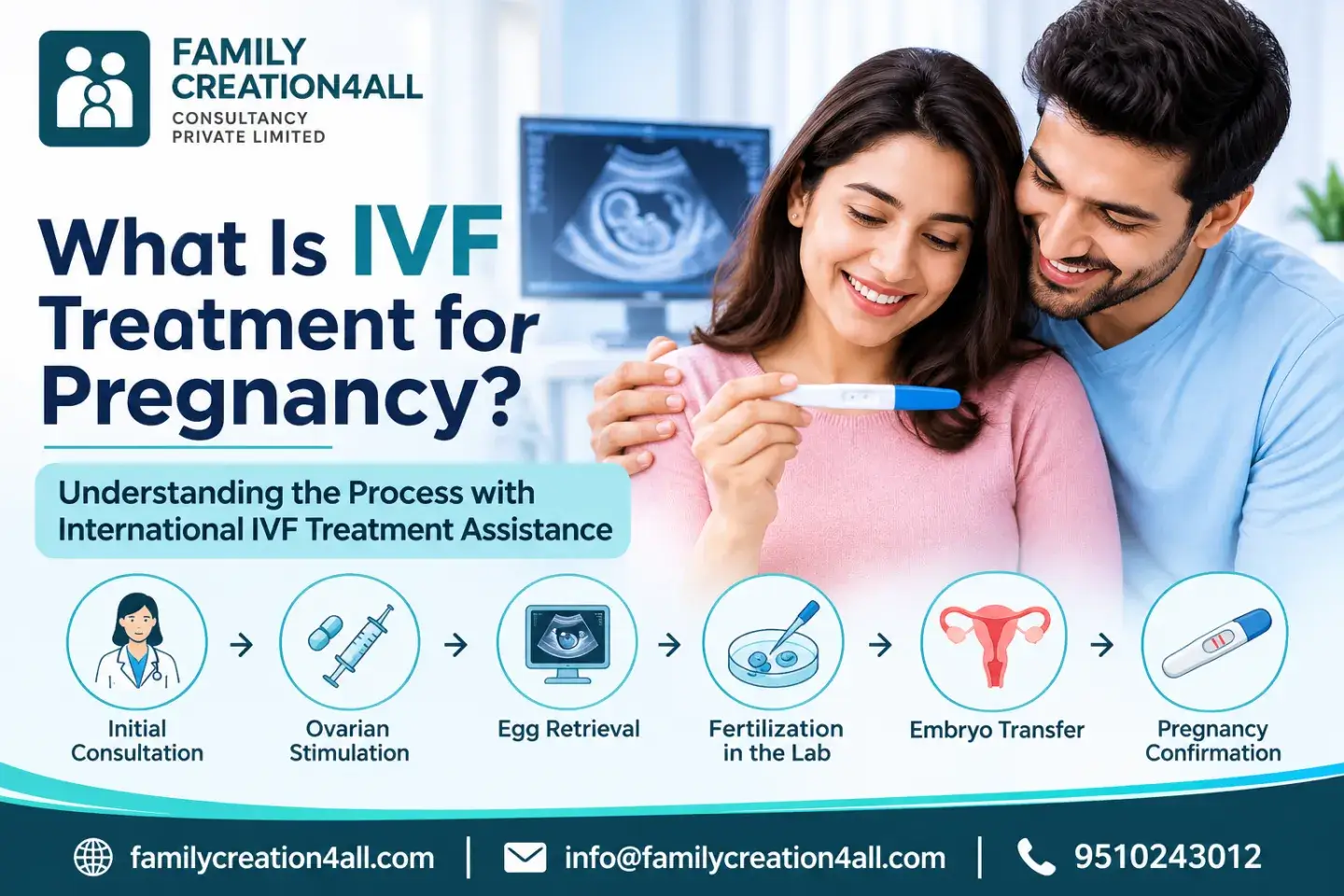
- The process includes fertility assessment, ovarian stimulation, egg retrieval, fertilisation, embryo development and embryo transfer.
- A fertility appointment helps intended parents understand their medical condition and available treatment options.
- IVF may involve the intended parents’ own eggs and sperm or donor options, depending on individual circumstances.
- Treatment duration, costs, and outcomes vary from person to person.
Introduction
Starting a family is an important journey, but natural conception is not always possible for everyone. For intended parents experiencing fertility challenges, In Vitro Fertilisation (IVF) can offer another opportunity to build a family. However, understanding the treatment process can feel confusing, especially for first-time patients. Knowing what happens at every stage can help you feel more prepared and confident. From your first fertility appointment to embryo transfer, each step has a specific purpose. This guide explains how IVF treatment works, what intended parents should expect and how professional fertility guidance can support their journey.
What Is IVF Treatment and How Does It Work?
IVF, or In Vitro Fertilisation, is an assisted reproductive technology that helps people conceive with medical support. During the process, eggs are collected from the ovaries and combined with sperm in a specialised laboratory.
When fertilisation is successful, the resulting embryos are monitored as they develop. A suitable embryo is then transferred into the uterus to support pregnancy.
IVF may be recommended for people experiencing blocked fallopian tubes, ovulation problems, certain sperm-related conditions, unexplained infertility, or other reproductive health concerns.
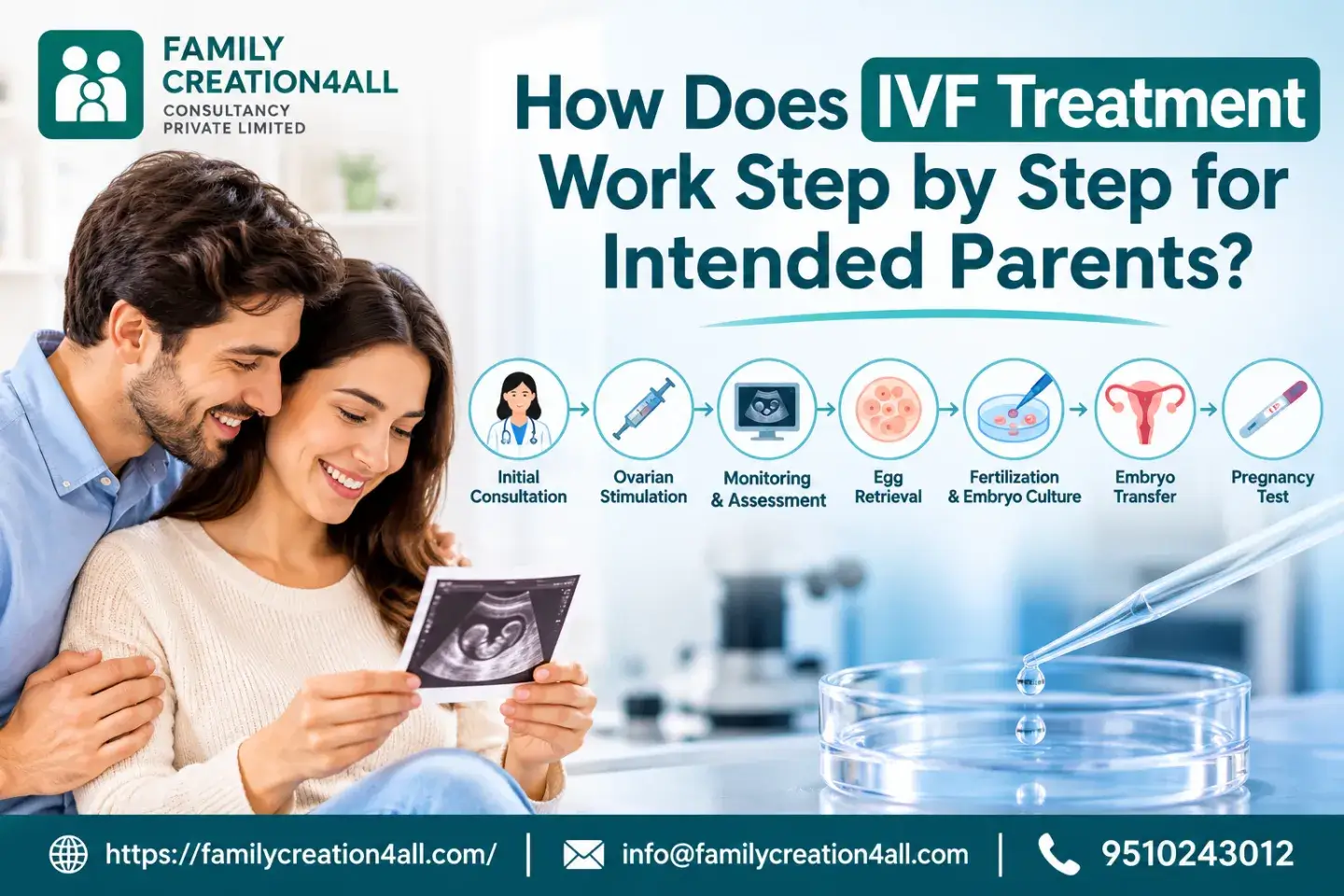
How Does IVF Treatment Work Step by Step?
The IVF process involves several stages. The exact treatment plan depends on the intended parents’ medical history, fertility condition, and specialist recommendations.
1. What Happens During the First Fertility Appointment?
The first fertility appointment is the starting point of the IVF journey. During this meeting, a fertility specialist reviews the intended parents’ medical history and understands their family-building goals.
The doctor may recommend:
- Blood tests to check hormone levels.
- Ultrasound scans to examine reproductive health.
- Semen analysis to assess sperm quality.
- A review of previous fertility treatments.
- Additional tests based on medical requirements.
An IVF consultation for intended parents also provides an opportunity to discuss treatment options, expected timelines, and possible challenges before starting the process.
2. How Does Ovarian Stimulation Work?
After the initial assessment, the fertility specialist may prescribe hormonal medications to stimulate the ovaries.
Normally, the ovaries release one mature egg during a menstrual cycle. During IVF, medications encourage the development of multiple eggs to improve the chances of collecting suitable eggs.
Doctors monitor the response through ultrasound scans and sometimes blood tests. The medication type and duration depend on the individual’s medical condition.
3. How Are Eggs Retrieved During IVF?
Once the eggs are mature, the doctor performs an egg retrieval procedure.
A thin needle guided by ultrasound is used to collect eggs from the ovaries. The procedure is generally performed under sedation or anaesthesia.
After collection, the eggs are taken to the embryology laboratory, where specialists assess their maturity and prepare them for fertilisation.
4. How Does Fertilisation Take Place?
The next stage involves preparing sperm from the intended father or a donor, depending on the treatment plan.
The embryologist combines the eggs and sperm in a laboratory. In certain cases, a technique called Intracytoplasmic Sperm Injection (ICSI) may be recommended. This involves injecting a single sperm directly into an egg.
The laboratory then checks whether fertilisation has occurred successfully.
5. What Happens During Embryo Development?
After fertilisation, the embryos are monitored in the laboratory for several days.
Embryologists observe their growth and development to identify suitable embryos for transfer.
Some embryos may also be frozen and stored for future use. In selected circumstances, genetic testing may be discussed with the fertility specialist to understand specific genetic risks.
6. How Does Embryo Transfer Work?
Embryo transfer is one of the important stages of IVF treatment.
During this procedure, a selected embryo is placed inside the uterus using a thin, flexible tube called a catheter.
For intended parents using a gestational carrier, the embryo may be transferred into the carrier’s uterus, subject to applicable medical and legal requirements.
The fertility specialist explains the procedure and provides instructions for follow-up care.
7. When Can Intended Parents Take a Pregnancy Test?
After embryo transfer, intended parents must wait for the recommended testing date.
A blood test that measures human chorionic gonadotropin (hCG), a pregnancy hormone, is commonly used to check whether implantation has resulted in pregnancy.
If the result is positive, the doctor may recommend an ultrasound scan to confirm the pregnancy and monitor early development.
How Long Does the IVF Treatment Process Take?
A typical IVF cycle may take around three to six weeks. However, preparation and additional procedures can extend the overall timeline.
The duration depends on several factors:
- The intended parent’s medical condition.
- The type of fertility medications used.
- Egg and embryo development.
- Whether fresh or frozen embryo transfer is planned.
- Additional medical tests or procedures.
A fertility specialist can provide a more accurate timeline after reviewing the medical reports and treatment requirements.
What Is the IVF Treatment Cost in India?
The IVF treatment cost in India varies depending on the clinic, city, treatment plan, and individual medical requirements.
Before starting treatment, intended parents should understand the possible expenses, including:
- Initial fertility consultation and diagnostic tests.
- Hormonal medications and injections.
- Egg retrieval procedures.
- Laboratory fertilisation and embryo development.
- Embryo transfer.
- ICSI or genetic testing, if recommended.
- Embryo freezing and storage.
It is always advisable to request a detailed cost estimate from the fertility clinic. Ask which services are included and whether additional procedures require separate payments.
How Can Familycreation4all Support Intended Parents?
The IVF journey involves more than medical procedures. Intended parents may also need help understanding treatment options, finding suitable specialists, organising medical records, and coordinating different stages of their journey.
Familycreation4all provides fertility consultation guidance, IVF specialist referral services, and coordination support through its medical and professional partners.
Its support can help intended parents:
- Understand available fertility treatment options.
- Prepare medical records for specialist consultations.
- Explore suitable IVF clinic referrals.
- Understand treatment timelines and estimated expenses.
- Coordinate with relevant fertility professionals.
Medical diagnosis and treatment decisions remain the responsibility of qualified fertility specialists and clinics.
Get Guidance for Your Fertility Journey
Every family-building journey is different. Having the right information and professional guidance can help intended parents understand their options and prepare for the next step.
Familycreation4all supports intended parents through fertility consultation guidance, IVF referrals, and coordination assistance.
Get In Touch
- Phone: +91 9510243012
- Email: info@familycreation4all.com
Take the first step towards understanding your fertility options with informed and compassionate guidance.
Frequently Asked Questions –
Q. Is IVF treatment painful?
A. Some stages, like hormone injections and egg retrieval, may cause discomfort. Egg retrieval is often done under some form of sedation or anesthesia. Everyone’s experience is different.
Q. Can intended parents use donor eggs or sperm?
A. Yes. They can use donor eggs and/or sperm when medically and legally appropriate. A fertility specialist can provide more information.
Q. Does every IVF cycle result in pregnancy?
A. No. IVF does not guarantee pregnancy. Outcomes depend on several factors, including age, egg and sperm quality, embryo development and individual medical conditions.
Q. Is a fertility appointment necessary before starting IVF?
A. Yes. A fertility appointment helps assess reproductive health, identify possible fertility concerns, and determine whether IVF or another treatment option is suitable.
Q. Can intended parents get help with IVF referrals?
A. Yes. Fertility coordination services can help intended parents understand available options and connect with suitable IVF specialists and clinics. Familycreation4all offers consultation and referral coordination support.